 GrantTap
Architecture · 2026-09-24 · 6 min read
A graph should answer a code question
How to read Weavatrix evidence, full-screen code towers, and the difference between a report and a repository binding.

A graph is useful when it helps answer where a change could matter, which component owns a behavior, and what evidence supports a relation. A polished picture with unverified edges is worse than a smaller, honest report.
GrantTap's architecture view uses Weavatrix reports for components and evidenced relations. The Health code map gives a full-screen way to inspect files and symbols. The two views should carry the same revision context rather than competing stories about the repository.
Read the report label first
Check the repository, engine version, source revision, scan time, and completeness. A report generated for another checkout or an old commit may still be interesting, but it is not current proof for your Task. Search and component inspection help narrow the view; a missing edge should not be interpreted as proof that no dependency exists outside the analyzed scope.
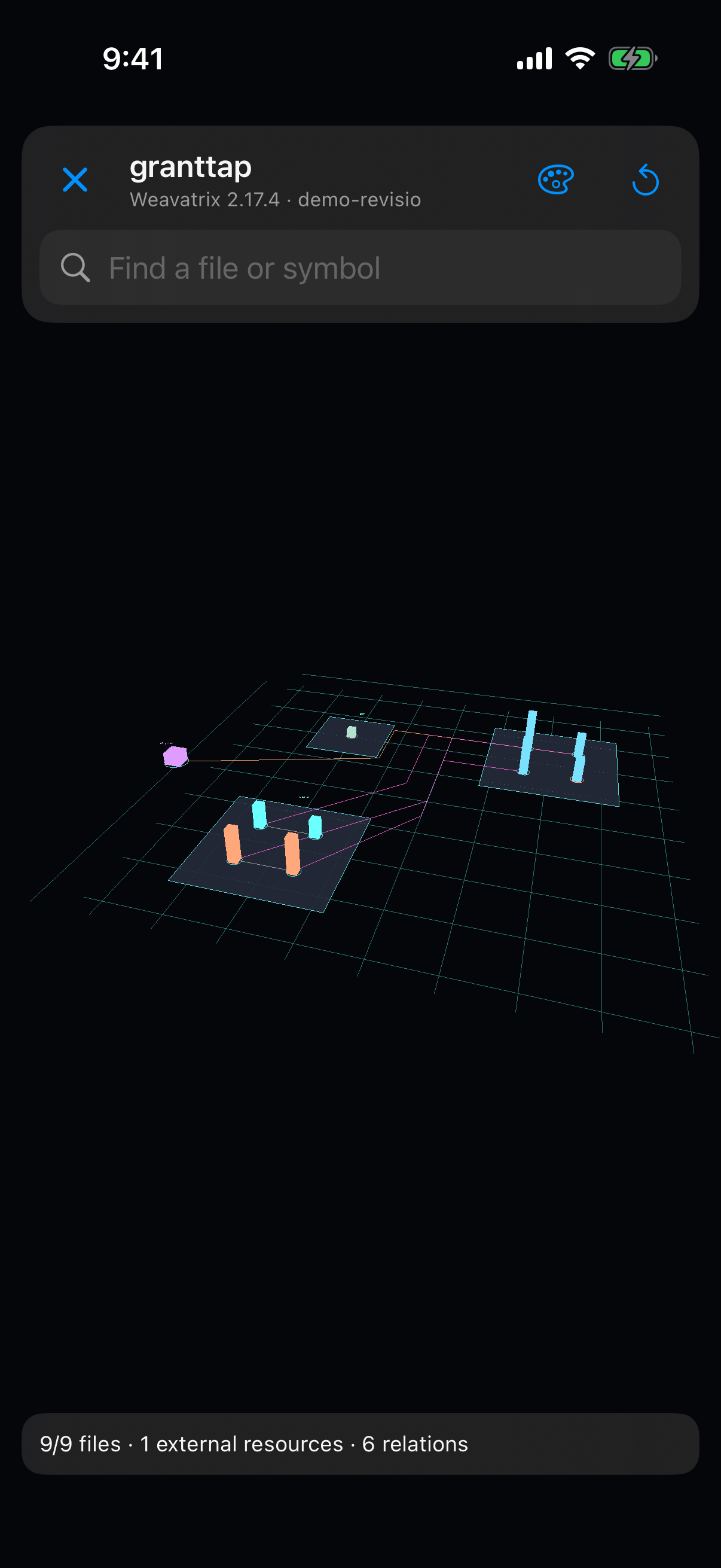
The graph screenshot on this site is a deterministic fixture labelled demo-revision. It shows navigation and rendering behavior, not an independent scan of a customer's private code.
Use code towers to orient, then inspect
The full-screen Health map groups code visually so you can find a file or symbol, understand its neighborhood, and open details. Tall or bright geometry is a navigation aid, not a quality score. A component deserves a stronger claim only when its underlying source and relation evidence can be inspected.
If architecture is unavailable on one computer, first check that its repository is bound and that the Engine can reach that checkout. The product should offer an explicit build or refresh action when supported. It must not claim that a connected Weavatrix library is absent merely because this Project has no current report.
From graph to action
For a coding Task, the next useful step is a revision-bound impact packet: what changed, which related components may be affected, why, and how fresh that conclusion is. The graph can supply evidence to Cortex context selection, but a stale or missing impact packet must be visible. A relation by itself does not calculate cost, authorize a command, or prove a test passed.